Chess Sudoku
- 4.6
- Rating
- 10.00K
- Installs
- $4.99
- Price

 Analysis by App-foxy
I approached Chess Sudoku as someone who enjoys Sudoku but sometimes wants a little more structure and variety than a standard number grid provides. This is a paid board game from Studio Goya LLC, built around Sudoku puzzles with a chess-inspired presentation. The idea is simple to understand, but the change in visual language makes the familiar logic feel fresh rather than completely routine.
My first impression was that this is best treated as a focused puzzle experience, not as a broad collection of distractions. You open it because you want to solve, think, and gradually improve your reading of a board. There is no need to learn a complicated game system before getting started. For a first-time player, that matters: the path from opening the game to making a meaningful move is short and reassuring.
What the chess-inspired Sudoku format feels like
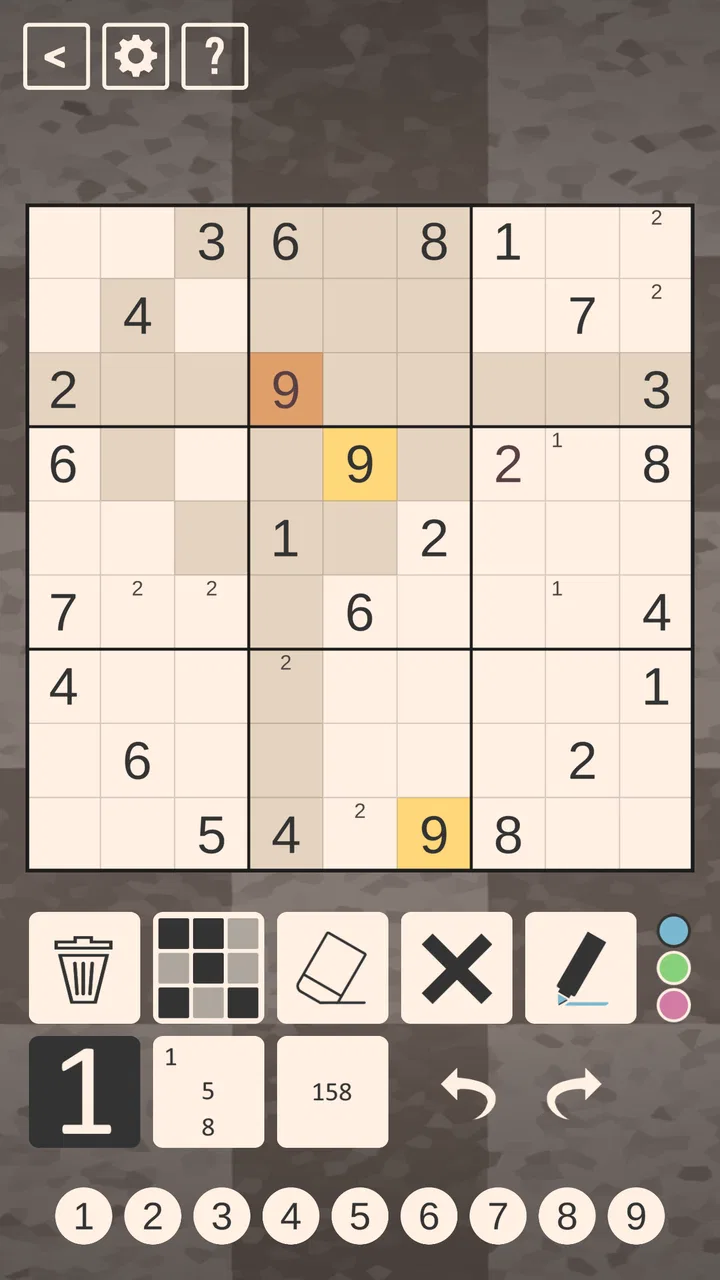
The central appeal is the meeting point between two recognizable board traditions. Sudoku gives you the familiar requirement to place values without repeating them in the relevant rows, columns, and regions, while the chess presentation gives the experience a more deliberate, handcrafted character. I would not describe it as chess with Sudoku added to it; it is still a Sudoku game. The chess influence is part of the identity and presentation rather than a separate strategy layer you must master.
You May Also Like

 Pandora - Music & Podcasts
Pandora’s Music Is Easy to Start, but Harder to Recover
Pandora’s strength is its low-effort path from a seed to a station. Its weak spot is how much confidence it asks you to place in connection, setup, and quiet recovery.

 8 Ball Pool
 Is Built on Rivalries, Rematches, and Routine
A close look at the rivalries, rematches, shared routines, and unanswered safety questions that turn a quick pool match into a persistent mobile community.

 Samsung Music
’s Quiet Strength Is Playing What You Already Own
Its reach comes less from spectacle than from dependable access to a personal library. That simplicity is both the app’s strongest retention engine and its ceiling.

 AccuWeather: Weather Radar
AccuWeather Review: A Quick, Clear Forecast for Everyday Decisions
For everyday plans, the best forecast is the one you can understand quickly. AccuWeather makes rain timing, radar, and local conditions easy to act on, with a few trade-offs.

 Hill Climb Racing
Why Hill Climb Racing Still Turns Crashes Into One More Run
A tiny car, a bumpy hill and one more upgrade: Hill Climb Racing keeps resurfacing because its simple chaos makes every near-miss feel personal.

 AliExpress - Shopping App
AliExpress Makes Global Shopping Feel Personal, but Shoppers Bear the Risk
AliExpress turns a global marketplace into a pocket-sized discovery engine. Its reach is useful, its shopping loop compelling, and its trade-offs easy to miss.
More From Our News Desk
View All News


That distinction is useful before installing. If you are looking for a full chess game, this will not replace one. If you already understand ordinary Sudoku and want puzzles that feel less like a disposable time filler, the combination is much more interesting. The game’s store summary highlights handcrafted puzzles, and that is the right expectation: this feels designed for people who want to sit with a puzzle instead of tapping randomly through endless content.
The game belongs in the board category, and its Everyone age rating makes it suitable for a wide range of players. I can easily imagine it on a family tablet, on a personal phone used during a quiet break, or beside a notebook for someone who likes solving logic problems away from a larger game. Its appeal is not based on fast reflexes, social competition, or a dramatic story. The reward comes from seeing the board become clearer as your deductions improve.
One important trade-off is the price. At $4.99, this is not positioned like a free casual download that you install casually and abandon without thought. I see that as a positive if you prefer a cleaner, more focused purchase, but it raises the standard you should apply before buying. Players who only want occasional Sudoku may be happier with a free alternative. Players who value a distinctive presentation and a more intentional puzzle experience have a stronger reason to consider it.
Getting started without overthinking the board
When I begin a new logic game, I want the first screen to tell me what kind of attention it expects. Here, the useful mindset is patience rather than speed. Do not try to fill every open space immediately. Start by scanning for a row, column, or region that already has enough information to limit the next move. This approach is more reliable than looking at the whole board at once, especially if the chess-like layout initially makes the puzzle feel more visually unusual than ordinary Sudoku.
A good first session should have a modest goal: understand how the board is organized, identify one safe placement, and then use that placement to make the next part easier. That is a more realistic definition of success than finishing a puzzle immediately. The first correct move teaches you how the game communicates information, and the second or third deduction is when the format starts to feel natural.
I recommend beginning with a puzzle when you have a few uninterrupted minutes rather than opening it while rushing between tasks. Sudoku depends on holding several possibilities in your head. If you constantly switch away, you may blame the difficulty for mistakes that were really caused by divided attention. A quiet commute, a coffee break, or the end of the day can work well, provided you are comfortable concentrating on a small board.
For a first-time user, the most practical workflow is straightforward:
Look over the complete board before touching a cell.
Find the row, column, or region with the clearest missing value.
Make one deduction you can justify, rather than guessing.
After each placement, scan the affected areas again.
Pause when the board becomes uncertain instead of forcing a move.
This method sounds basic, but it prevents the most common beginner problem: making a speculative placement and then building several later decisions on top of it. In a puzzle game, a slow correct start is more useful than a fast wrong one.
The first meaningful success
The first satisfying moment is not necessarily completing an entire puzzle. It is recognizing why a particular entry must be correct. For example, if a value is already present in most of the relevant lines and regions, the remaining legal position may become obvious. After placing it, do not immediately jump to another random part of the board. Recheck the same neighborhood. A single confirmed entry often changes the available choices around it.
This is where I think the game can teach better habits than a purely speed-focused Sudoku app. The visual style encourages you to read the board as a composed object rather than as a collection of isolated taps. I found it more rewarding to ask, “What has become impossible?” than to ask, “Where can I put something right now?” That shift turns the session into reasoning instead of trial and error.
If you are completely new to Sudoku, keep your first objective small. Learn the relationship between a cell and the three areas that constrain it: its row, its column, and its region. You do not need advanced solving techniques to enjoy the opening stage. Basic elimination is enough to create progress, and the game becomes more approachable once you stop expecting every move to be immediately visible.
Experienced Sudoku players may use a different starting routine. Rather than waiting for obvious single placements, they can scan for pairs of possible values or compare the same value across several regions. The chess-themed presentation does not remove the familiar logic, so existing skills remain useful. The fresh part is the way the board invites you to slow down and inspect relationships.
A practical tip is to avoid solving only from the center outward or only from left to right. That habit can make you miss a simple restriction elsewhere. I prefer a circular scan: check the most constrained area, follow the information it creates, then return to the wider board. This makes each move feel connected and reduces the sense that you are searching blindly.
Where new players may become confused
The biggest possible confusion is assuming that the word “Chess” means you must understand chess rules. You do not need to think about openings, captures, check, or piece movement to approach the Sudoku puzzles. The chess reference sets the tone and visual identity; it does not turn the game into a hybrid match where two rule systems operate at the same time.
Another source of hesitation is the appearance of a puzzle that seems to offer several equally attractive moves. In that situation, resist the urge to choose one because it “looks right.” Sudoku is built on restrictions, so the correct question is whether the other positions have been eliminated. If you cannot explain why a placement is forced, it may be better to inspect another row, column, or region until the board gives you stronger evidence.
Beginners also sometimes treat an empty cell as a problem to solve immediately. I find it more useful to treat it as a question with a changing answer. Every confirmed placement elsewhere can reduce its possibilities. Leaving a cell alone for a while is not lost progress; it is part of the solving process. This is especially important in a handcrafted puzzle, where the intended satisfaction comes from connecting deductions rather than filling spaces at random.
If the board begins to feel crowded, narrow your attention to one value at a time. Choose a number and check where it can legally appear across the open regions. This technique turns a visually complex board into a series of smaller searches. It is also a useful recovery method after a pause, because it helps you reconnect with the puzzle without trying to remember every possibility at once.
There is a human limitation to this kind of game that is worth acknowledging: concentration changes how difficult the same puzzle feels. A puzzle that seems easy in a calm room may feel frustrating when you are tired. I would not interpret a slow session as a failure of the game or of your ability. Take a break, return later, and begin with a fresh scan instead of trying to repair a chain of uncertain guesses.
How it compares with ordinary Sudoku apps
Compared with a typical free Sudoku app, Chess Sudoku is easier to appreciate if you care about atmosphere and focus. Many free alternatives compete through large libraries, daily routines, timers, hints, advertisements, or multiple modes. Those features can be useful, particularly for someone who wants constant variety or a measurable training schedule. They can also make the experience feel busy.
This game’s stronger case is its identity. The chess-inspired framing gives the board a more crafted personality, and the paid model makes it feel like something you choose deliberately rather than something that happens to be installed between other apps. That does not automatically make it better. If your priority is an enormous supply of puzzles, detailed statistics, competitive leaderboards, or a broad set of difficulty tools, a more feature-heavy Sudoku app may suit you better.
I would also separate it from chess-learning apps. Those are better for practicing tactics, understanding piece movement, or preparing for a real game. This title is for logic-puzzle time. The comparison matters because the name may attract chess players who want chess strategy. They may enjoy the board aesthetic, but they should buy it for Sudoku rather than expecting chess instruction.
The game is also a better fit for people who dislike aggressive interruption. A focused paid puzzle can be more comfortable than a free title built around frequent prompts or competing modes. Still, the purchase means you should be confident that the core activity itself is enough for you. Someone who loses interest after a few Sudoku boards may not get good value, however appealing the presentation looks.
Everyday situations where it works well
I can see myself using it after dinner when I want something absorbing but not emotionally demanding. A story game asks me to remember characters and objectives; a competitive game asks me to react; this asks me to examine a board and make careful decisions. That makes it a good transition between work and rest, especially when I want screen time that still feels mentally active.
It can also work during a short waiting period, but only if you accept that a puzzle may not end when the appointment or journey begins. My advice is to start a session when you are comfortable leaving the board unfinished. A forced interruption is less annoying when you view the game as a sequence of deductions rather than a race to the final cell.
For families, the Everyone rating removes one obvious barrier, but I would still introduce the game by solving alongside a younger player rather than handing over the board without explanation. The useful lesson is not simply which value goes where. It is how to justify a choice and recover from uncertainty. That makes the game a pleasant shared logic activity, even for players who are not interested in chess itself.
It may also appeal to someone who enjoys physical Sudoku books but wants a reusable digital board. The trade-off is tactile: paper lets you circle candidates and make broad handwritten notes, while a digital interface keeps the board cleaner and easier to carry. If your favorite part of paper solving is writing everywhere, the screen may feel restrictive. If you prefer a tidy puzzle that can be picked up and put down, the digital format is more convenient.
Compatibility, cost, and who should choose it
The current version is 1.8.1, and it runs on Android 6.0 or later. That gives it a reasonably broad compatibility range for Android users, including people who do not keep the newest phone available. Before purchasing, I would still check that your device meets the minimum system requirement and that the screen is comfortable for reading a board. A small display can make any Sudoku game less pleasant, regardless of how good the puzzles are.
The game costs $4.99. I think that price makes the decision fairly clear: buy it if you want a dedicated, chess-flavored Sudoku experience and expect to return to it; skip it if you only want a free sample or need a large collection of unrelated puzzle modes. The price is not justified by the name alone. It is justified only if the focused format matches the way you like to play.
The response from its existing audience is encouraging, with a 4.6 average from around 559 ratings. It has also passed 10K installs, which suggests that it has found a real audience without presenting itself as a mass-market game. I would read those figures as reassurance that the concept works for other players, not as a promise that every Sudoku fan will prefer it. Puzzle taste is personal, particularly when presentation matters as much as mechanics.
Studio Goya LLC has kept the concept specific rather than turning it into a general-purpose board-game package. That narrow focus is a strength for the right person. It is easier to recommend to a Sudoku fan curious about chess aesthetics than to someone who wants one app to cover every kind of board entertainment.
My practical recommendation after spending time with it
My advice to a new player is to give the first session enough time to reach the point where one deduction creates another. Stopping after only a few taps can make the game seem passive, because its pleasure builds through connected reasoning. Once you experience that chain, the handcrafted approach becomes easier to understand and the chess-inspired styling feels like more than decoration.
Use a calm, methodical rhythm. Scan first, place only what you can support, and revisit the affected areas. When you are stuck, change your viewpoint rather than guessing: inspect one value across the board, compare the open positions in a region, or step away briefly. These habits are more valuable here than chasing speed, and they make the experience friendlier for someone who has not played much Sudoku.
I would not recommend it to a player whose main goal is chess improvement, competitive timing, or an endless stream of novelty. A conventional Sudoku app may be better for extensive difficulty controls, and a dedicated chess app will obviously be better for learning chess. But if you want a self-contained board puzzle with a distinctive identity, a gentle learning curve, and enough character to make familiar logic feel different, this is a worthwhile choice.
In the end, Chess Sudoku works because it does not ask the player to master two games at once. It takes the quiet reasoning of Sudoku and gives it a chess-minded setting, creating a focused experience that I can recommend to people who enjoy thoughtful puzzles more than noisy features. The strongest reason to install it is simple: you want to sit down, make one careful deduction, and feel the whole board open up from there.
FAQs for Chess Sudoku
01What is Chess Sudoku, and how does it differ from regular Sudoku?
Chess Sudoku combines the familiar number-placement rules of classic Sudoku with additional chess-inspired restrictions. Depending on the puzzle mode, certain numbers may be prevented from appearing in related squares based on chess-piece movement patterns, such as a knight’s move. This creates a more challenging logic experience that requires both traditional Sudoku deduction and careful attention to the extra board constraints.
02Is Chess Sudoku suitable for beginners?
Chess Sudoku can be suitable for beginners, especially if the app provides introductory puzzles, tutorials, or adjustable difficulty levels. However, players who have never tried Sudoku may need time to understand both the standard rules and the chess-based restrictions. Starting with easy boards and using hints sparingly is a good way to learn the mechanics without making the experience feel overwhelming.
03Does Chess Sudoku require an internet connection to play?
Most Chess Sudoku gameplay is generally designed to work offline once the application has been installed, allowing users to solve puzzles without Wi-Fi or mobile data. An internet connection may still be needed for advertisements, analytics, cloud synchronization, online competitions, updates, or downloading additional puzzle packs. Availability of offline features can vary depending on the app version and device.
04Are there hints, undo options, or tools to help solve difficult puzzles?
Chess Sudoku commonly includes useful solving tools such as undo, erase, note-taking, mistake highlighting, and optional hints. These features can make difficult boards more approachable, although some may be limited by advertisements, in-game currency, or subscription restrictions. Players who want a purer challenge can usually disable assistance features and solve puzzles entirely through their own logic.
05Is Chess Sudoku free to download, and does it contain advertisements or in-app purchases?
Chess Sudoku may be available as a free download, but the exact monetization model depends on the Android or iOS version. Free editions often include advertisements, while optional purchases may remove ads, unlock extra puzzle collections, provide more hints, or add premium themes and features. Before downloading, review the store listing to check pricing, subscriptions, and any age or privacy details.
Pros
- Combines chess-inspired logic with Sudoku for a distinctive puzzle experience.
- Short rounds make it easy to play during quick breaks.
- Gradually increasing difficulty keeps the challenge engaging.
- Improves pattern recognition
- planning
- and concentration.
- Usually playable offline
- making it useful without an internet connection.
Cons
- The chess theme may feel confusing for players unfamiliar with chess.
- Limited puzzle variety can make extended sessions feel repetitive.
- Higher difficulty levels may become frustrating without clear guidance.
- Small board elements can be difficult to read on compact screens.
- Ads or optional purchases may interrupt the otherwise focused gameplay.

Chess Sudoku
Gallery